Grief & Loss
For the early shock, the quieter months, difficult dates, changing emotions, and the ordinary days when someone is deeply missed.
 Compassion NavigatorGuidance. Support. Hope.Free 15-Minute Conversation
Support topics
Grief can follow a death, a diagnosis, a relationship ending, or a life that no longer looks the way you expected. Whatever changed, your loss deserves to be understood—not compared.
Find the place that feels closest to what you are living through today. You can take the rest one step at a time.

Your support collection
Turn a card over for a quick introduction, then open its complete page for guidance, helpful words, and practical care ideas.
Tap or click a card to turn it over. Every card leads to its own resource page.
For the early shock, the quieter months, difficult dates, changing emotions, and the ordinary days when someone is deeply missed.
For parents, siblings, grandparents, and the people who want to keep showing up after the death of a child—with words, practical care, remembrance, and long-term support.
For diagnosis, treatment, uncertainty, changing family roles, and the long stretches between medical updates—whether you are ill or standing beside someone who is.
For the exhausting middle, when love, responsibility, fear, decisions, and grief exist together—and the caregiver needs care too.
For hospital days, waiting rooms, discharge, rehabilitation, and the return home—with useful ways to lower the family’s load.
For days shaped by anxiety, depression, grief, emotional exhaustion, or overwhelm—begin with one grounding, manageable next step.
For the empty routines, quiet rooms, difficult decisions, and deep daily absence left by a beloved animal companion.
For separation, estrangement, family rupture, friendship loss, and relationships that changed or ended without the closure you needed.
For changes in home, health, independence, identity, family roles, or the places and relationships that once felt familiar.
For miscarriage, stillbirth, infant death, fertility grief, and the future that had already begun to take shape—with support that honors both the baby and the parent’s love.
For losses that happened without warning or under frightening circumstances—when shock, unanswered questions, painful images, and grief are carried together.
For job loss, retirement, returning to work, changing careers, workplace disruption, or losing a professional identity that once helped define you.
More ways grief appears
Not every loss is recognized or understood by the people around you. But what changed matters. You deserve care that meets your grief with tenderness—without comparison or explanation.
Support when shock, frightening details, unanswered questions, and grief arrive all at once.
Open this support topic →02Care after miscarriage, stillbirth, infant loss, infertility, or the loss of the future you expected.
Open this support topic →03Support after losing the person woven into your home, identity, plans, and everyday life.
Open this support topic →04Guidance for grief shaped by love, history, changing family roles, and things left unfinished.
Open this support topic →05Support for the loss of shared history, family identity, and the person who knew earlier versions of you.
Open this support topic →06Support for a central bond that formal grief systems may fail to recognize.
Open this support topic →07Care when a relationship, family role, or shared future has changed or ended.
Open this support topic →08Support after job loss, retirement, returning to work, a career pivot, or a change in professional identity.
Open this support topic →09Support for major life changes that affect your safety, belonging, independence, or sense of self.
Open this support topic →010Support while living with the fear, uncertainty, and changing roles that can begin before an expected death or major loss.
Open this support topic →011Care when someone is physically present but deeply changed, or physically absent without clear answers or closure.
Open this support topic →Why the kind of loss matters
Who or what you lost, how the loss happened, and the future that changed all shape what grief feels like. Find support that recognizes your experience without comparing it to anyone else's.
Understand how grief differs by loss
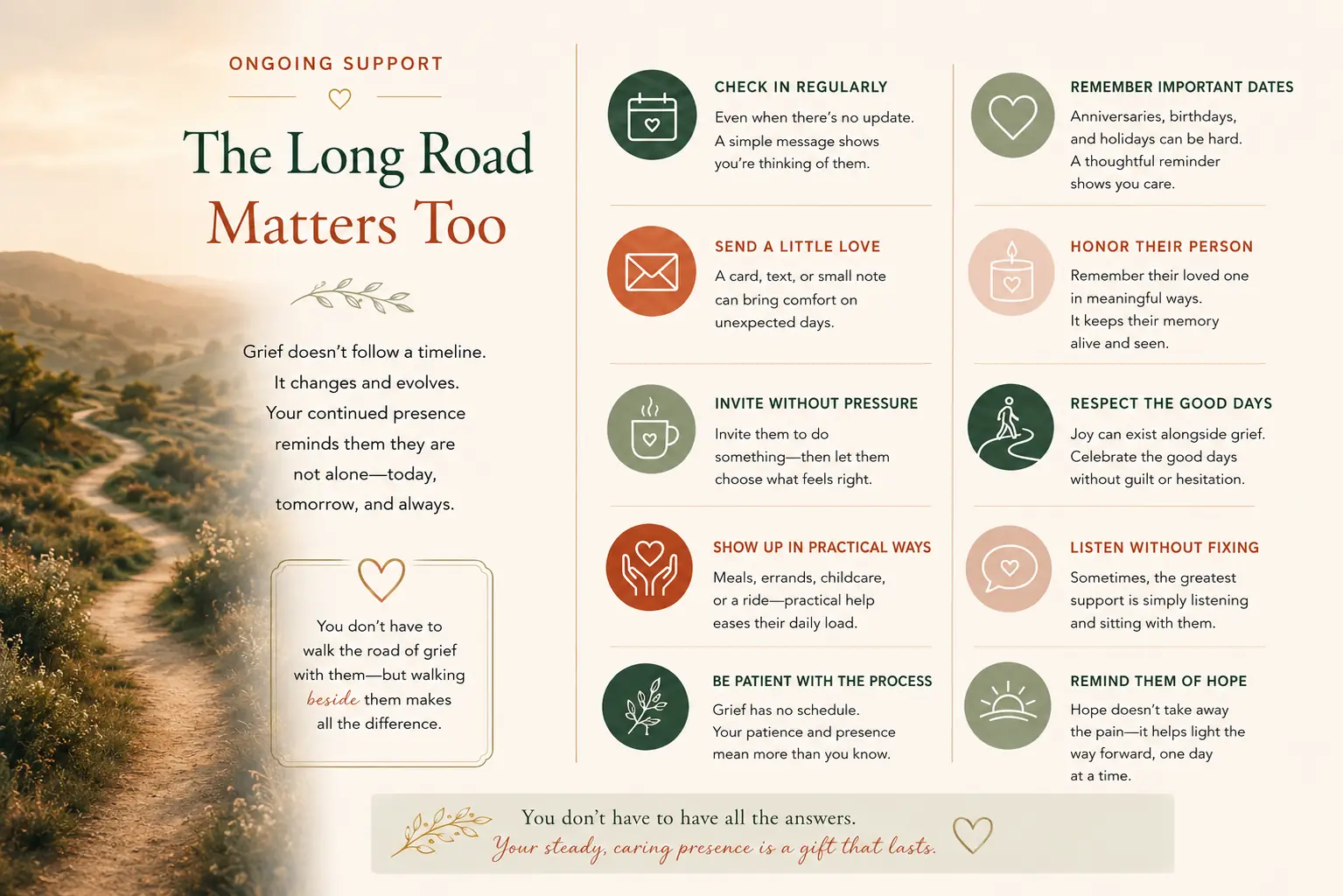
Ongoing support
Grief changes over time, but care should not disappear when the funeral ends or other people return to their routines. A remembered date, a simple check-in, or one practical offer can still mean a great deal.
How I help
Choose the kind of presence, practical help, or remembrance support that feels closest today.
 $39 Personalized GuideA practical written plan for one real grief-support situationSee the Grief GPS →Grief CompanionSupport for hard moments and disrupted daily lifeExplore Grief Companion Support →
 Gift ConsultationPersonal recommendations shaped around the person and lossExplore Gift Consultation →
 Legacy ConversationsRecord and preserve the stories of someone you loveExplore Legacy Conversations →